Humanity is living between technoutopia and technophobia. Technology and Artificial Intelligence (AI) drive daily human lives, and it is causing ethical dilemmas: Is AI being used to protect human beings, or can it harm them? How can we reduce the risks of military applications of AI and improve the cause of peace through global governance on AI and technology within an ethical framework? Are ethical considerations brought into play when decisions on the development and deployment of technology and AI are being made in an attempt to strike a balance between beneficial progress and actual and potential harm?
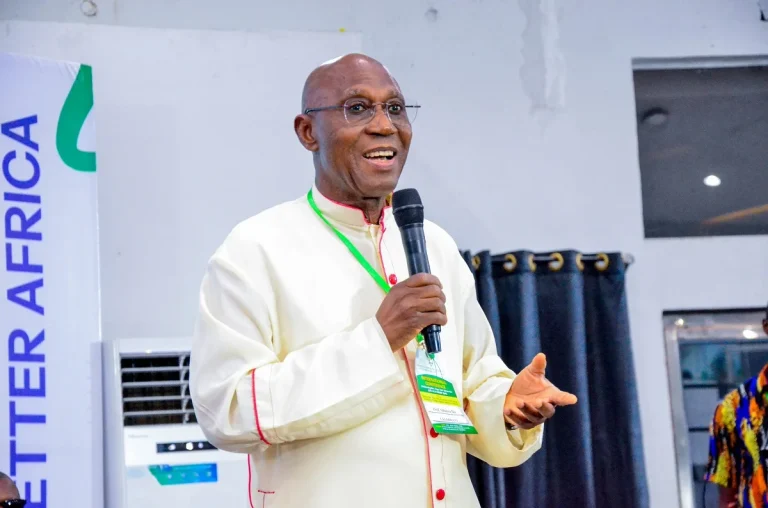
Globethics.net organised a workshop panel moderated by the Executive Director, Dr Obiora Ike, on ‘Cyber Ethics, Education and Security: Serving Humanity with Values’ to address some of these questions at the 10th World Summit on the Information Society (WSIS) Forum at the International Telecommunications Union (ITU) in Geneva, Switzerland, on the morning of 11 April 2019.
Humanity has to use technology and AI as a tool to teach decision-making and critical thinking skills. Society has to make ethical use of technology, and governments have to provide the correct frame for that to happen. It is interesting that, both when it comes to giving up personal freedom and privacy as well as environmental sustainability, the public tends to ‘stick their heads in the sand’ and is compliant with legal and commercial practices that sometimes violate human rights or contribute to global warming. Moving from ‘money-driven’ to ‘ethics-driven’ investments in technology and AI, as well as having a critical dialogue to discuss the impact of technology and AI innovation on humans, and on the planet, will move humanity from technophobia to technoutopia.
These were some of the conclusions reached by the six panellists from four continents representing business, academic, legal, and NGO sectors speaking to a full room at the WSIS Forum 2019.
The workshop was based on the issues raised by contributors to the book ‘Cyber Ethics 4.0: Serving Humanity with values’ published by Globethics.net in 2018. Panellists addressed the topic from their particular perspectives, from the point of view of ethics, law, education, and/or security. The workshop ended with a book launch and an open invitation to the participants present at the workshop to contribute to the next volume on cyber ethics.
Dr. Mariana Bozesan, an integral investor implementing the United Nations Sustainable Development Goals (SDGs) with Planetary Boundaries through the launch of the Investment Turnaround and a member of the International Club of Rome, opened the floor to challenge the audience to transform the way we think about ethics. She spoke about the five transformational policies for a prosperous and sustainable world according to Johan Rockström, highlighting the point that traditional investment and philanthropy are the main reasons why change is not happening. Her speech ended by emphasizing the role of current and future generations to move from money-driven to eco-driven investments.
Representing the legal sector, Dr. Pavan Duggal, an advocate in India’s Supreme Court, spoke of the lack of jurisdiction related to AI, intelligence, and data collection and sharing of information technology, and the role of ethics when creating it. He shocked the audience when he talked about the breach of data that happened in Asdhaar, an Indian company dealing with biometric identification, where more than 15 million records in the database were compromised by a software patch that left the data without critical security features, and personal data ended up on the Darknet. According to Dr. Duggal, experts have estimated that the global cost for these cyber breaches in 2019 will be over 2 trillion USD and that in 2021 the cost of cybercrime will be over 6 trillion USD. Dr. Duggal also triggered the discussion among the participants on what type of information should be shared and how it can be shared through the web.
“Is mass surveillance legitimate or a violation of our democratic values?” Referring to the case of Edward Snowden, Dr. Siobhán Martin, Director of the Leadership in International Security Course at the Geneva Centre for Security Policy (GCSP), focused on the role of international intelligence agencies and their use of information to cause harm to individuals and to society on different levels and of violation of human rights. Dr. Martin found it interesting to see how societal norms are evolving, with the public becoming more accepting of surveillance, data collection, and security measures that limit our freedom or impose upon our privacy.
Another point of the discussion focused on the role of education in developing new technology and how to use it responsibly. Dr. Alexander V. Libin shared two examples of the use of technology in education: a role-playing simulation as an ethical game that helps decision-making and a YouTube channel, HtV, with videos that stimulate individuals to demonstrate critical thinking skills in ethically-charged situations.
Dr Christoph Stückelberger, Globethics.net Founder and President, ended the panel discussion by reassessing ethics as a practical and helpful tool to solve everyday dilemmas. He introduced the concept of ‘Globalance’ as a means to balance opposing values. He gave the example of the relationship between freedom and security and how these two values are positive but are in tension with one set against the other.